Yara Walter · 4 September 2026
Navigating Data Policy Evolutions and Their Effects on User Retention Within Digital Note Platforms
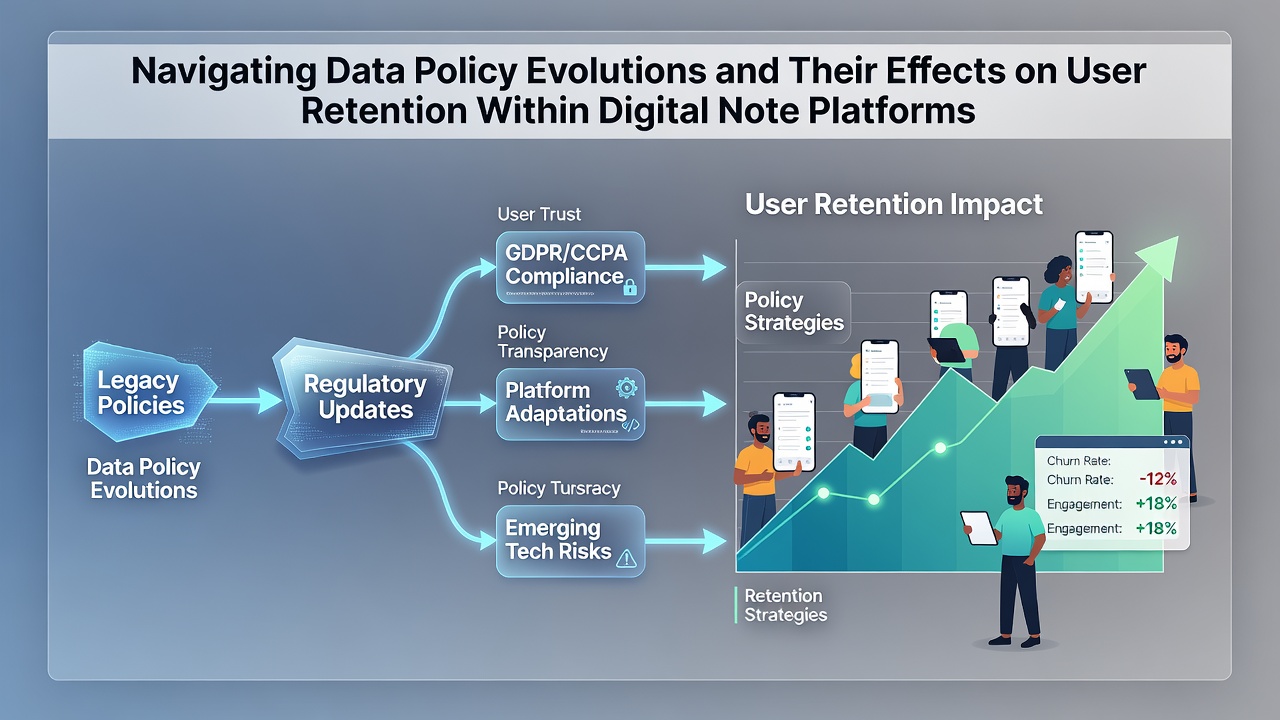
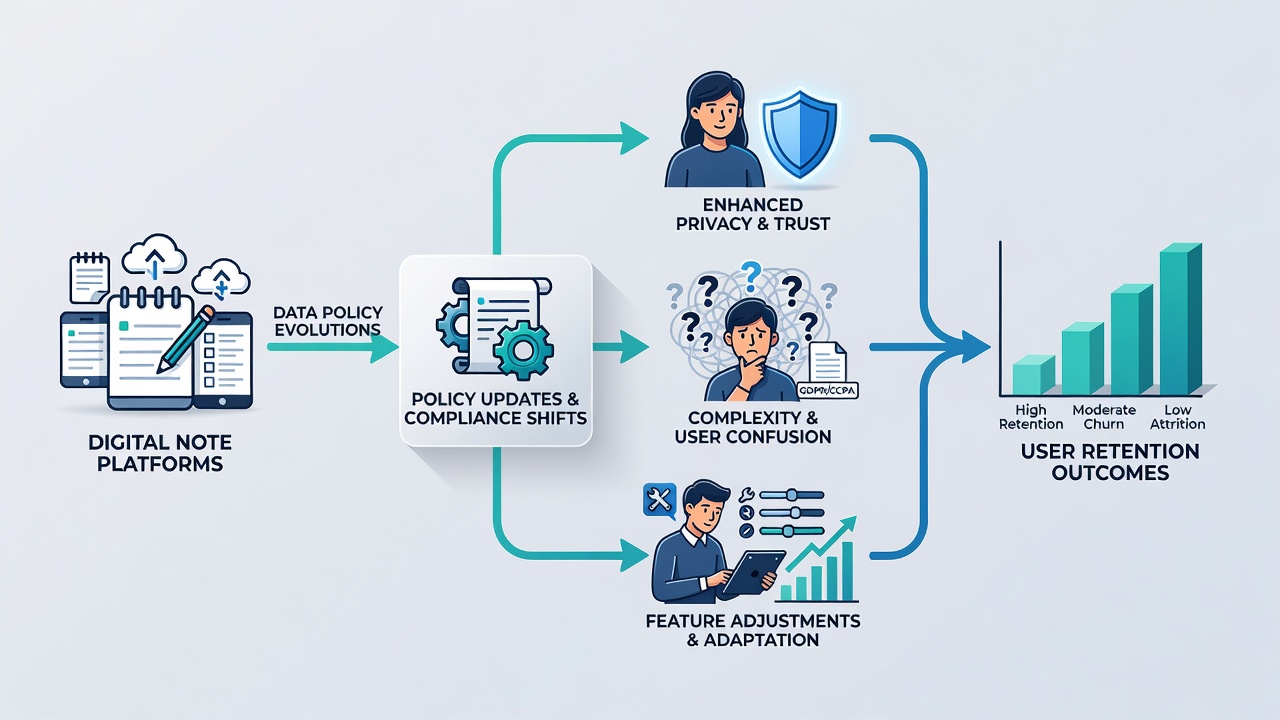
Data policy changes have reshaped how digital note platforms handle user information, and these shifts directly influence retention patterns across services like Evernote, Notion, and Microsoft OneNote. Platforms must adapt storage practices, consent mechanisms, and data sharing agreements while users decide whether to stay or migrate their notes elsewhere.
Regulatory updates from multiple regions create ongoing compliance requirements. The European Union's General Data Protection Regulation established baseline standards for consent and data portability, and similar frameworks emerged in California through the Consumer Privacy Act plus Canada's Personal Information Protection and Electronic Documents Act. Each jurisdiction introduced distinct timelines and enforcement approaches that forced platforms to revise their terms and backend systems.
Key Policy Shifts Affecting Note-Taking Services
Early platforms stored notes with minimal restrictions, yet successive regulations introduced mandatory deletion rights, cross-border transfer limits, and explicit opt-in requirements for analytics. Observers note that services operating globally often rolled out unified privacy dashboards to meet the strictest rules first, then applied those controls everywhere. This approach reduced development costs while satisfying auditors in different markets.
By 2024 many providers had implemented granular export tools that let users download notes in standard formats, and these features became retention factors when users compared alternatives. Research from academic groups tracking software adoption shows that platforms offering seamless migration options retained higher percentages of active accounts during policy transition periods.
Retention Metrics and Platform Responses
Industry reports compiled by research firms indicate that transparency around data handling correlates with lower churn rates. Users who received clear notifications about policy updates and new consent options tended to maintain their subscriptions or active usage, whereas abrupt changes without explanation produced measurable drops in daily active accounts. Digital note services responded by adding in-app explanations, scheduled webinars, and detailed changelog entries that walked users through adjustments.
One platform introduced a regional data residency option in 2025 that allowed enterprise customers to select storage locations within specific countries, and subsequent usage logs showed improved renewal figures among teams with strict internal compliance policies. Smaller individual users responded more to simplified deletion workflows and the ability to pause data collection for AI training features.
Case Examples from Major Providers
Evernote updated its data processing agreements in response to evolving European requirements and simultaneously launched a public transparency report that detailed request volumes from authorities. Those who studied account activity after the announcement found that long-term users cited the report as a reason for continued loyalty. Notion, meanwhile, emphasized its zero-knowledge encryption options and published third-party audit summaries that addressed concerns about note content scanning.
Microsoft OneNote benefited from its parent company's existing compliance infrastructure, yet still faced questions about integration with broader Office 365 data flows. Users who valued ecosystem consistency stayed, while others who preferred standalone tools explored competitors with narrower data collection scopes. Figures from app store analytics reveal that migration spikes often coincided with policy announcement dates rather than actual implementation deadlines.
Upcoming Developments in September 2026
Additional rules scheduled for September 2026 will expand requirements around automated decision-making and AI model training on user-generated content. Digital note platforms that already separate note content from training datasets stand positioned to communicate compliance quickly, whereas services still developing opt-out mechanisms may encounter user hesitation during the transition. Government agencies in the European Union and Australia have signaled coordinated enforcement timelines that could affect global user bases simultaneously.
Platforms preparing for these changes have begun testing new consent flows and data minimization settings in beta programs, and early participant feedback suggests that clear visual indicators of data usage help maintain trust. Retention strategies now include proactive outreach campaigns that highlight upcoming features such as on-device processing and enhanced export controls.
Conclusion
Digital note platforms continue adjusting their operations to align with data policy evolutions while monitoring retention indicators closely. Services that communicate changes clearly, provide practical tools for data control, and maintain consistent practices across regions demonstrate stronger user continuity. Observers tracking the sector expect further refinements as new requirements take effect in September 2026, with success measured by sustained engagement rather than temporary compliance checkboxes alone.