Otto Long · 16 October 2026
How Note-Taking Apps Handle Offline Mode Conflicts During Multi-Device Sync Sessions
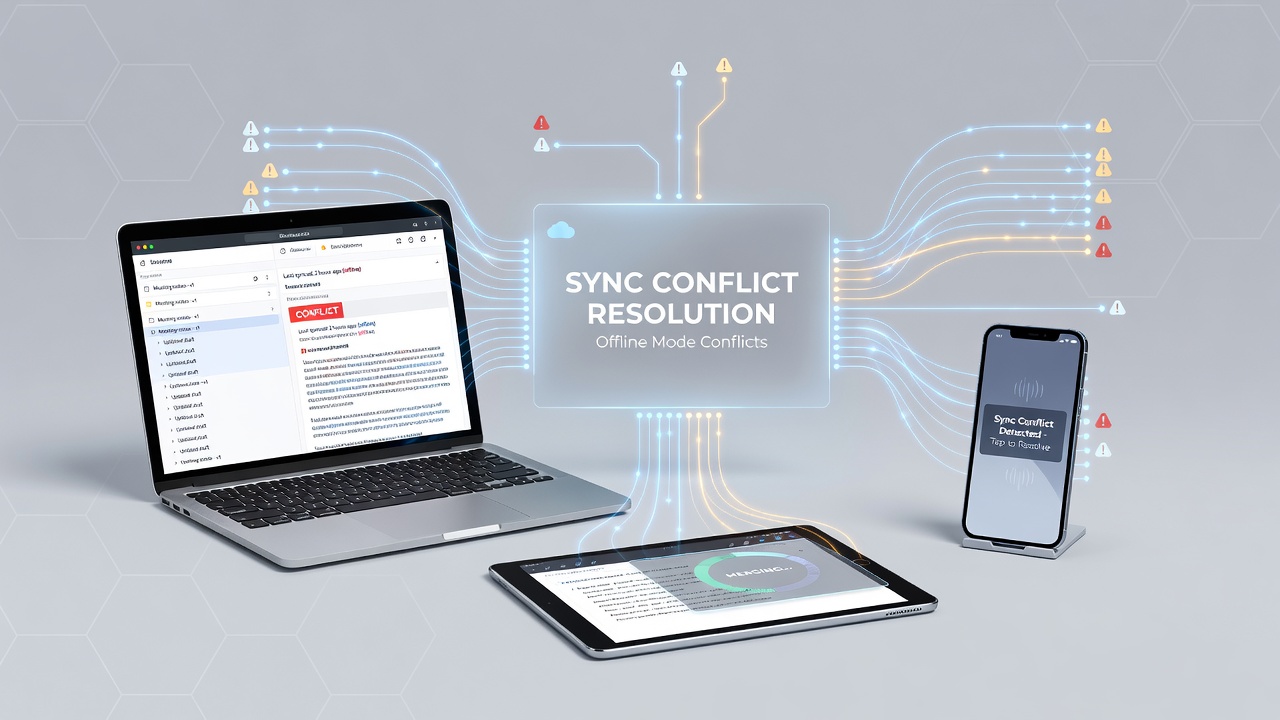
Modern note-taking applications manage offline functionality by allowing users to edit content locally on each device while queuing changes for later synchronization, and this approach creates specific challenges when multiple devices come back online at different times during October 2026 and beyond. Data indicates that platforms store modifications in local databases until connectivity returns, at which point they compare versions against a central server or peer devices to identify discrepancies. Experts observe that the process begins with timestamp checks and hash comparisons to determine whether the same note received edits across separate sessions without network access.
Core Mechanisms for Offline Data Storage
Applications maintain local caches that record every keystroke or structural change in formats such as JSON or proprietary markup, and these records include metadata like device identifiers along with modification sequences. Researchers discovered that systems often employ append-only logs to preserve the order of operations even when devices operate independently for hours or days. One study revealed that storage engines prioritize durability over immediate consistency, which means conflicts surface only after reconnection rather than during the editing phase itself.
Conflict Detection During Synchronization
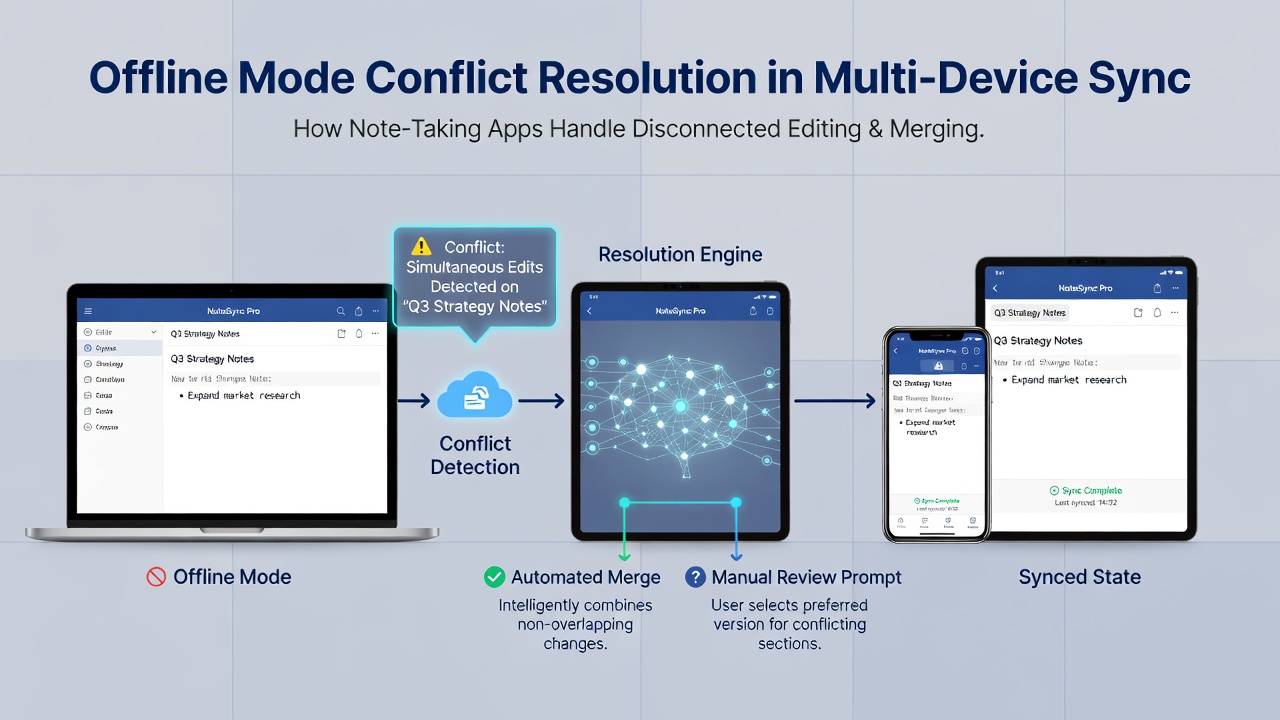
When a device regains internet access it initiates a sync session that transmits its local changes to a coordination server or directly to other registered devices, and servers compare incoming deltas against the latest known state using vector clocks or similar ordering techniques. Observers note that mismatches trigger conflict flags when two or more devices report non-overlapping edits to overlapping sections of the same note. Those who have examined production logs find that detection algorithms scan for overlapping byte ranges or semantic blocks rather than relying solely on whole-document timestamps, because partial overlaps represent the most common real-world scenario.
Resolution Strategies Employed by Major Platforms
Many services apply last-write-wins rules based on server-received timestamps, yet others attempt automatic merging through operational transformation or conflict-free replicated data types when edits affect distinct paragraphs. People often find that unresolved cases surface as side-by-side comparison views that prompt users to choose which version to retain or to combine elements manually. Evidence suggests that some applications maintain a full revision history so that any chosen resolution can be rolled back if subsequent devices report additional offline edits. Take one developer team that documented how their system splits conflicting notes into separate linked documents to avoid data loss while preserving user intent across sessions.
Industry reports from sources such as Innovation, Science and Economic Development Canada highlight increasing reliance on hybrid algorithms that combine server-side reconciliation with client-side heuristics. Another source, the Commonwealth Scientific and Industrial Research Organisation in Australia, published findings on distributed data consistency that apply directly to note synchronization patterns observed in 2026 deployments.
Edge Cases and Multi-Device Scale
Conflicts grow more complex when three or more devices edit the same note during overlapping offline periods, because ordering becomes ambiguous without a single source of truth. Applications address this through quorum-based voting or by designating one device as the primary arbiter for a given user account. Those who've studied this know that network partitions lasting several days increase the volume of queued changes and therefore raise the probability of overlapping edits in shared notebooks or collaborative spaces.
Conclusion
Overall, note-taking platforms continue to refine their offline conflict handling through layered detection, selective merging, and user-assisted resolution, and these techniques evolve alongside improvements in distributed systems research. The combination of local durability, metadata-driven comparison, and flexible recovery options allows users to maintain productivity regardless of connectivity gaps while minimizing unintended data overwrites across their device ecosystem.